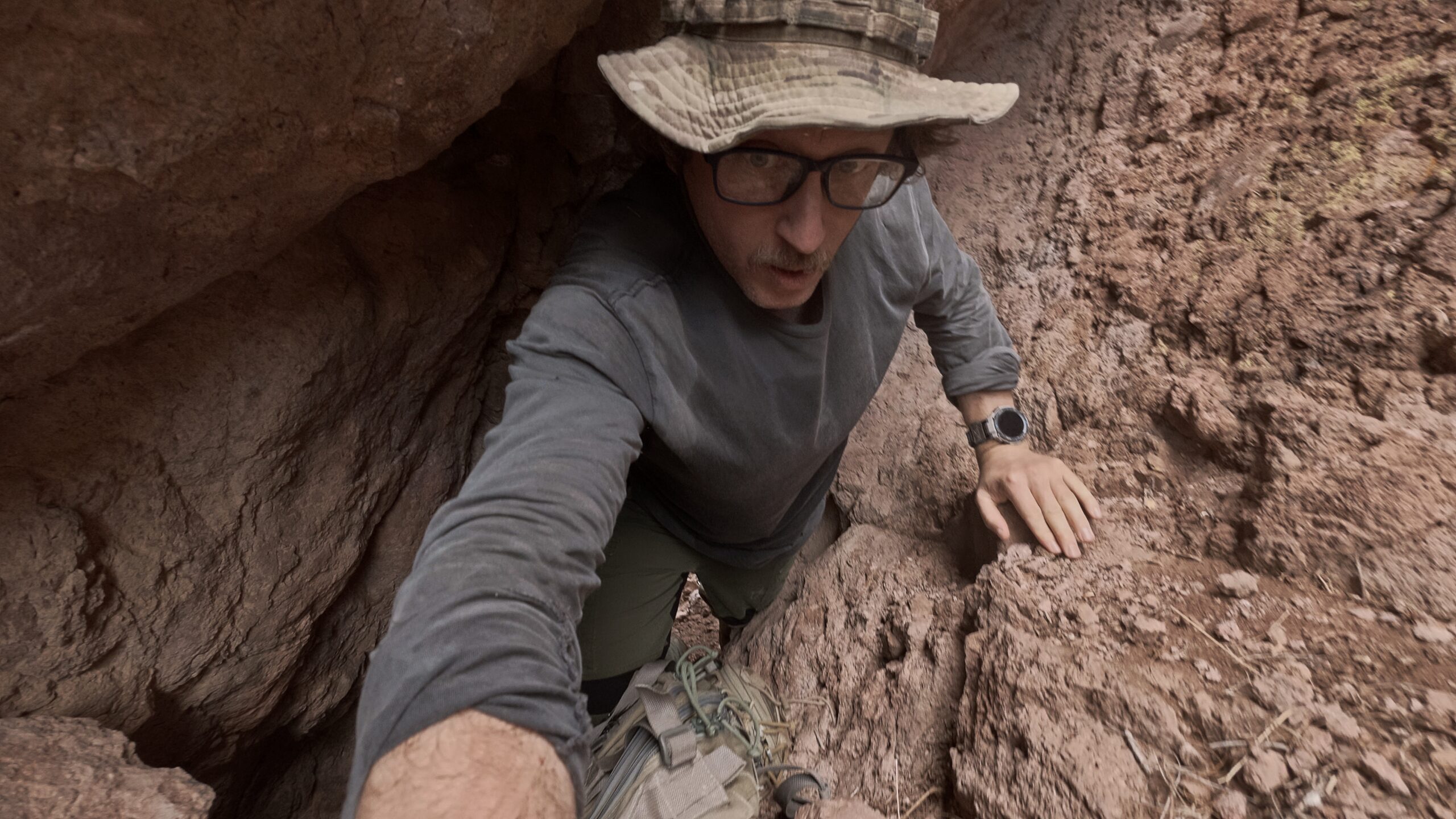
I imagine the first story was shared under the light of a fire millennia ago in the company of friends and a warm meal. Today we yearn to share our stories yet community has become too distant to gather around the fire. Our ancient tradition of storytelling has been replaced by the “Boob Tube” and digital friends on social networking sites. We all have the tools in our pocket to share our stories in this digital world. Yet great stories are lost on the technicalities of modern cinematography. Today I hope to break down those barriers and bridge the gap from the fire to the tube so you can share your stories.
We are all wired with the basics of storytelling. Traditionally it has been a two way experience in which the audience interacts with the story teller; the audience smiles, a chuckle or gasp, whatever they do the storyteller reacts to further the story. Unfortunately, the digital realm has resulted a breakdown in this interactive storytelling experience.
The context of the story is also often completely lost. In the community of others, you bring out your phone and tell the vacation story as you pass around the pictures you captured. We tend to only share the pictures on the internet and the story itself is lost. You must bring the person into the experience you want to share. This involves an introduction and includes images of where you are! Then build up your story by playing to the camera in the environment which your story takes place.

I like to explore in the mountains. This is best illustrated by a picture at the base of a mountain. I call this shot “The World View”. This is followed by me saying that I’m out exploring in the mountains. The story that unfolds from there is a sequence of clips throughout my journey sharing the experience as I ascend the mountain. Lastly, I have a clip at the summit showing the spectacular view for the climax of the story.

Shot list to capture your story
A scene is a short story comprised of clips where you say walk up to a scenic overlook showing the lake. This starts out with two clips.
World View is a wide shot establishing the area your story is about. You might steal this from say when you are at the lake and place it at the beginning of the video. You can further embellish this beautiful landscape with a closeup of say the sign announcing the trailhead.
Introduction either orate (voiceover) or film yourself saying where you are, who you are with, and what you are doing. e.g. Hey, it’s Matthew here, I’m escaping the hectic city life to visit this beautiful alpine lake in the mountains today.
Story glue / A-Roll Your main storyline is told through a series of clips where you speak to the audience as if they were there with you to partake in the experience. Cinematographers often refer to this as “A-Roll”. Here it’s you walking through nature, sharing the sights, sounds, and feelings that run through you on your little adventure.
Beauty Shots / B-Roll Cinematographers refer to the beauty shots as B-Roll. They gets sprinkled in while we tell our story. Similar to passing around your photos as you share you story over a shared meal. These are the flowers, the trees swaying in the wind, the deer you see, butterflies, whatever catches your attention.
Climax this is arriving at your destination and ultimately sharing the thing you came to do or see. A collage of your favorite clips of the lake, the mountains. Perhaps your friends with you standing in front of the lake waving hello. Smiles, and energetic friends always help bring us back to what storytelling is about. That is, people and sharing experiences.
Get in the habit of capturing these clips and you’ll have the elements to create a cohesive story that stands on it’s own.

Framing your clips
Years ago I employed a layman to help shoot what I thought were simple clips. They wildly spun the camera around to bring different objects I needed video clips of into the shots. One shot I wanted rolling through an intersection from the passenger seat of a car. It would slowly glance at the traffic lights as we rolled through. The camera operator filmed a jerky movement of the interior of the car to the traffic lights. This is not how we experience our world and cameras that aren’t deliberate in their moments will make your audience motion sick. Movements should be slow, deliberate, and thought out. Ultimately the entire photoshoot was a waste. I had to throw all the clips away because the camera operator used too much camera movement.
Think of video as an extension of still photography. Ultimately, the video record button is intended to capture motion in the environment not motion in the camera. Let me give an example. I shoot a lot of images out hiking. My go to is a gorgeous backdrop like a mountain peak looming in the distance. This makes an awesome photograph. However, I am clicking to record a video! I frame in the beautiful mountain landscape in the background with the trail in the foreground. Then I walk by the camera. If I’m filming somebody, I may very subtilty pan, rotate from side to side, to follow the acquaintance walking by on the trail. The story is a hiking story, the motion is hiking. The backdrop is a still landscape to immerse the audience in the beautiful hiking environment.
Clip length
A video production is a collection of many shorter video “clips”. If the clip a is too long then the audience looses focus. Video producers switch between clips every 5 to 15 seconds to keep the audience’s focus. Ideally, the clips you capture should reflect this 15 seconds. You may, like to account for what I call tails, this is where you let the camera run longer, say 30 seconds instead of 15. This provides options to trim the clips for your story.
When you take clips of people talking then you may film longer than 15 seconds. Ultimately, these will be broken up by layering your b-roll / beauty shots in front of them. I like to record one clip per topic. Say for instance you are filming a clip at the beach. Your friend is talking about how beautiful it is there. I’d capture that in one video clip. This would then get clips of waves crashing into rocks over the top of it in the edit to break it up into shorter cuts. Next, I restart the camera to record another topic about what cocktails you are going to enjoy on the beach. I might use b-roll of the waitress bringing out the drinks to layer over that narrative. Get the idea?
I find editing these shorter clips easier as I don’t have to create any sub clips. This is a bit more advanced topic we can get into on a later course. Older cinematographers and audio people worked with one tape or “reel” where creating sub clips was a necessity. Today we have the luxury of digital files. Essentially we can have a tape / reel for every single clip which makes it easier to sort, organize, and place them into our final story.
How to edit the video
They say the best camera is the camera you have on you. Today that’s your smart phone. Typically our phones are a mess of random photos best shared scrolling through our photo gallery and orating those stories with friends over coffee.
This new video storytelling skillset will enable you to bundle your random clips into a cohesive story that stands on it’s own. You’ll need a tool referred to as a non linear editor, NLE for short. This will help you order those clips to tell your story. Since you’re already shooting on your smart phone you’ll be best served to start with an NLE app for your phone.
You will first sequence the video clips you shot in the order that best tells your story. This starts by establishing context through your introduction and world view clips. Next you’ll order your A-roll, storytelling clips, which talk them through the journey. And lastly, you layer your beauty shots, aka b-roll, on TOP of the track containing the context and a-roll shots.
This restructuring of the sequence of clips is what gives non linear video editing it’s name! This enables us to tell a complete story without having to gather around the fire.
Alternatively, some social networking platforms allow you to trim clips. There you could trim and upload your clips on a single post in the order that best tells your story. This doesn’t automatically play them at once but it does contain the elements of your complete story. Some platforms may also have a basic NLE built into them.

Long format video
Once you grow comfortable creating short stories then you can craft them into longer pieces. Let’s say you created a beach scene, this may only be one of a set of vacation scenes for your trip to Hawaii.
These sets of short stories build on each other, to an ultimate climax, perhaps you chose the hike to the top of a volcano for your climax. You can capture adversity as well, the steep slopes you struggled on to get there. Even break the story up into mini scenes in a bigger “chapter”. That might be packing your bag, driving to the trailhead, ascending the volcano, a small storm on way up, etc. All these short stories add on each building to the ending climax, an amazing ocean view from atop the caldera on a volcano.
Story telling through the lens will all become almost as natural as around the campfire once you become comfortable with the tools.
Sound design
Melina ago sound design was in the orator’s voice, they imitated noises in the environment, even growls of animals. Once in a while a random swells in the fire they gathered around would reawaken the audience. There may have even been the light peaceful musical instrument in the background. These all played together to immerse the audience in the story. Today we refer to this as sound design.
Foley: When you pear into the volcano you might add some rumblings of lava, at the beach the sound of ocean swells. Foley as we refer to it further reinforces the environment in which the story takes place.
Sound Effects: Perhaps you add a drumroll to the mix, as you approach the edge of the volcano. Obviously nobody would have brought drums on a volcano hike but the sound helps build up to the climax. Sound effects are noises which direct attention fo the view but aren’t necessarily a part of the environment that the story was recorded in.
Music: is the emotional backdrop to our story and ultimately serves as a gateway to the deepest parts of our mind. I like to get my audience into a relaxed state. My productions typically open with a meditative slow paced instrumental piece. I then accent the that with uplifting scores during certain points in the production. A well produced musical score functions much like a deep tissue massage opening up the mind to the story being shared.
Voiceover: is a process of recording additional narrative for your video. This can fill in holes in your story, or even weave in another story itself. Lets say you captured the ascent of the volcano but also wanted to share a story of how the natives revered this spot. You can orate that story and sprinkle it into your scene climbing the volcano itself.
Your story needs to stand on it’s own without adding additional sound. Most people starting out in cinematography add a musical piece that feels right for the story, then leave sound design at that. Sound design itself requires additional tools which are beyond the scope of basic storytelling.
Sharing your story
The clips in this article were taken on a hike to Thumb Butte in southern Arizona. I loaded the video to YouTube. It was shot using a GoPro camera and cut with DaVinci Resolve. These details are unimportant as you’ll likely use the tools available to you such as your phone and a NLE app.
Sharing video has become somewhat cumbersome in that I can no longer share them on a “disk” because most people don’t have access to players. It’s forced me to use online methods where they get stored in a data center and can then be played anywhere there is internet access.
While this is ideal for “sharing” there’s a myriad of issues from environmental to video quality no to mention privacy. Most individuals may not concern themselves with this starting out but they are still common topics which concern us today. I’ve yet to find the ideal solution which addresses all these concerns so for now I continue to use YouTube.
Here’s a sort production which employs all the topics touched on in this article.
Create stories with me
I’m putting together a course where we go on a short adventure. I show you how to get the shots to share a basic story. Then we cut “a scene” from your shots using your smart phone. There are varying adventures from a walk in the park to mountain climbing you choose the pace and I’ll help you get the shots and a edit memorable story you can share with friends and family too far away to gather around the fire.
